
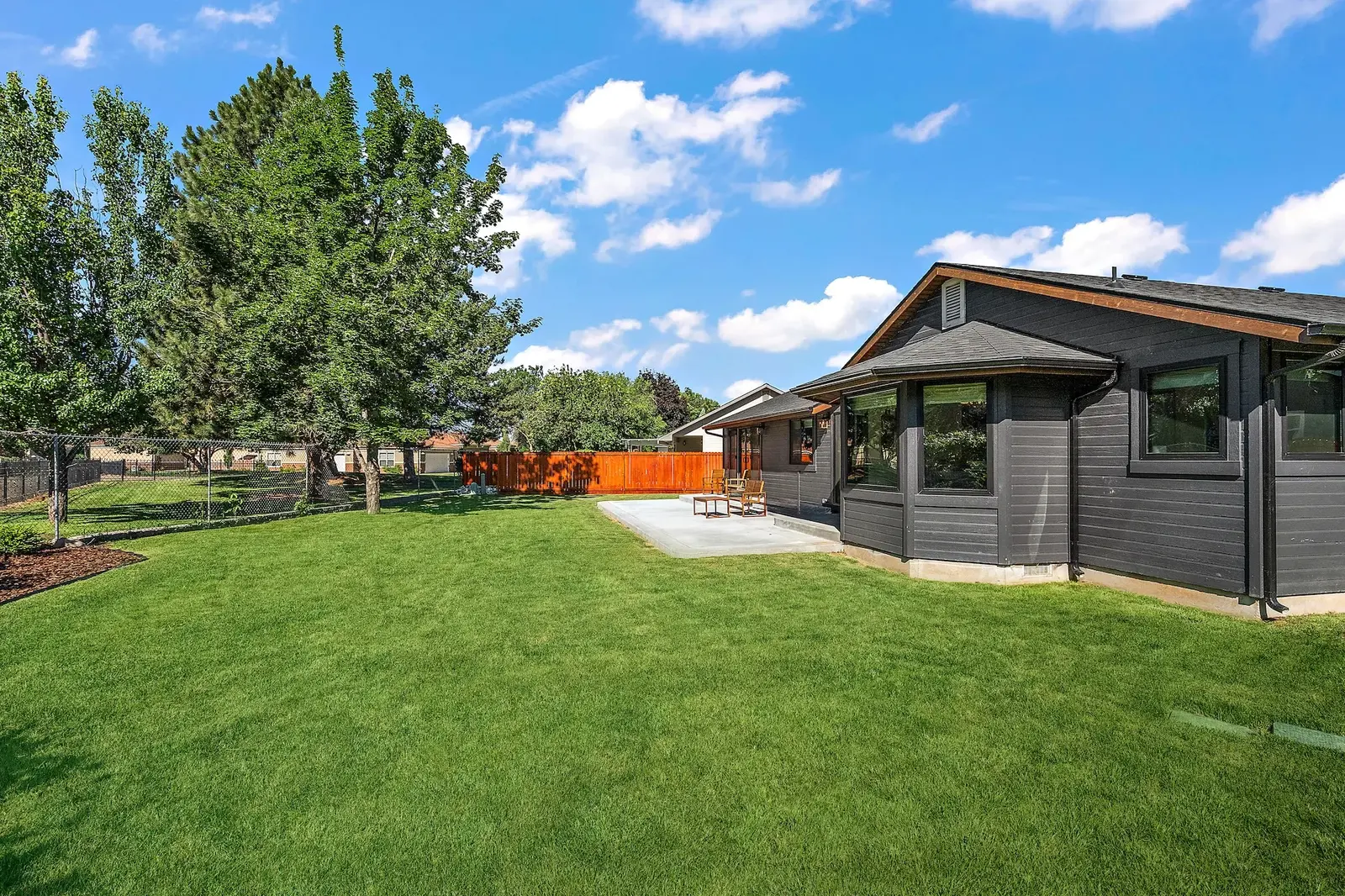
Both add space. They solve different problems, follow different rules, and suit different lots — here is how to tell which one your project actually is.
The short version: choose an ADU if the new space needs to function as a separate home — for a relative, a tenant, or eventual rental income. Choose an addition if you simply need your existing house to be bigger. Almost everything else follows from that one distinction.
An accessory dwelling unit is a complete, independent home on the same lot: its own kitchen, bathroom, entrance, and usually its own utility connections. Someone can live in it without ever entering your house. It can be detached in the garden, built above a garage, or carved out of existing space with its own front door.
A home addition makes your house bigger. The new rooms open into the existing floor plan and share its heating, plumbing and electrics. A primary suite, a bigger kitchen, an extra bedroom, a proper family room — these are additions, and no amount of square footage turns one into a separate dwelling.
That independence is the whole decision. It determines which rules apply, what it costs to build, how disruptive the work is, and what the space is worth to you afterwards.
Boise regulates ADUs specifically, and the limits are real. Under Zoning Code section 11-03-03.2B, an ADU may not exceed 900 square feet or 70% of your main home’s floor area, whichever is smaller, may have no more than two bedrooms, and you may have only one per lot.
One clause surprises people, and it works in your favour: minimum lot size and density limits do not apply to ADUs. Plenty of lots that look far too small still qualify. If you have assumed your property rules an ADU out, that assumption is worth checking.
Additions face no comparable ceiling. They are governed by the ordinary dimensional rules of your zone — setbacks, lot coverage, height. On a generous lot an addition can be considerably larger than any ADU would be permitted to be. On a tight lot, those setbacks can be the binding constraint instead.
A detached ADU is built as a separate structure. Your house stays closed up and the work happens outside it. For families who cannot easily move out, that matters more than almost anything else.
An addition has to be tied into the existing house, which means opening an exterior wall and, for a period, living beside a building site. It is entirely manageable and we do it constantly — but it is a different experience from watching something go up in the garden.
An addition raises the value of a single property in the ordinary way: more finished square footage, better layout, a house that suits more buyers.
An ADU can do that too, but it also creates something an addition never can — a separately habitable dwelling. That may mean rental income, a place for a parent that preserves everyone’s privacy, or flexibility as the family changes. It is a different kind of asset, and worth more to some owners than the equivalent square footage attached to the main house.
We are deliberately not quoting figures here. Cost turns on size, site conditions, how far services have to run and your finish level, and a number pulled from an article rarely survives contact with a real property. We walk the lot and put it in writing instead.
An ADU is probably right if a relative needs somewhere with their own front door, you want rental income, you want to downsize while family takes the main house, or you would rather not live through construction inside your home.
An addition is probably right if you need the house itself to work better — a bigger kitchen, another bedroom, a proper primary suite — if you want more space than 900 square feet, or if the new rooms only make sense connected to the ones you already have.
Still unsure? That usually means the honest answer is “it depends on the lot”, and the fastest way through is to have someone walk it with you.
An ADU. It is self-contained, so it can be let independently. An addition shares your home’s systems and entrance, so it cannot.
Usually a detached ADU, because your house is never opened up.
Not necessarily — minimum lot area and density rules do not apply to ADUs in Boise. Setbacks and parking still do, and we check them against your property before any design work.
Yes, subject to lot coverage and setbacks. It is less common, but an addition to the main house and a detached ADU can coexist on a suitable lot.
If you want to go deeper on either route: ADU building in Boise covers the zoning detail and the two-stage permitting process, and home additions in Boise covers addition types and how we run the build.
Tell us what you are trying to achieve and we will walk the property with you. No pressure, no hard sell, just a straight answer about what is possible.
Get started